Saturday, May 17, 2025

Pierre et Antonin deliver delicious sustainability through hybrid grapes in Languedoc


Pierre Caizergues and Antonin Bonnet having been pioneering the use of sustainable hybrid grapes in the Languedoc region of France and making flavorful, approachable wines that satisfy today's more eco-conscious consumer. At a media dinner at Juliette restaurant in Williamsburg, Brooklyn, the pair showcased current vintages with French bistro cuisine.

With an estate in sight of the Pyrenees and close to Carcassonne, they've planted resistant varieties - or "cepages resistant" - such as Souvignier Gris, Grenache Bouquet, and Cabernet Cortis. The hardy hybrids don't need sulfites or copper spraying in the vineyards, and that leaves plenty of native yeast on the grapes to encourage natural fermentation in the winery. All bottles are sourced from local suppliers and no alumninum is used in the packaging, reducing the carbon footprint of the effort. Starting with a modest 5 hectares a few years ago, they've sinced added 50 more as they have seen wine lovers embrace their natural wines. 

Our tasting included:

Pet-Nat Vivant - A delicious and fresh white wine of Souvignier Gris with light carbonation that occurs naturally. 

Pet-Nat Vigne Sauvage - Pale pink, lightly sparkling rose of Grenache noir - perfect for summer parties. 

Bouquet - A fresh rose with strawberry aromas and flavors made from the Grenache Bouquet grape.

Petit Sauvage! Blanc - Fresh apple and pear flavors in this white wine made from Souvignier Gris. 

Petit Sauvage! Rouge - A fruit-forward, low-tannin red from Cabernet Cortis.

Petit Sauvage! Orange - Savory notes of clove and orange peel in this skin contact wine of Souvignier Gris. 

Check out Pierre Antonin to learn more about their sustainable wine projects! 


Tuesday, September 24, 2024

Champagne toast to new beginnings!


What's the right pour for a special toast? I asked myself this as I contemplated an upcoming gathering celebrating my big new job in corporate marketing. There's one hard and fast rule for toasting life's major wins - it must have bubbles! 

When making toasts, I have clinked glasses with Spanish Cava, French Cremant, Italian Prosecco, Lambrusco, and Franciacorte, American sparkling wine, South African Cap Classique, and more. They all have a special place in my heart. 

There's nothing like a Champagne toast

As I get older, I understand in a deeper way that we need to make time to celebrate our big wins with the people who love us and cheer us on.  And on BIG occasions, I always return to the classic: Champagne toasts. 

Serious achievements deserve serious wine

While I don't have the means to pour "the real stuff" often, for me, splurging on Champagne gives more gravitas to life's major moments. Champagne production is a time-consuming and complex process including riddling bottles, disgorging, adding the dosage, secondary fermentation, and blending different years to create a cuvee. For serious achievements, a serious wine is in order.  

Now, where to snag the special bottle? Having recently relocated to Maplewood, New Jersey, I am spoiled for choice when it comes to wine shopping. Just up the street is Lum's Cellars, and a short drive away is the famous Wine Library. I'm fairly close to one of my former go-to wine chains - Total Wine. I'll figure out the where and which of my bottle later.

But for now, I'm anticipating the moment I pop the cork with family and mark a new beginning in my life. Cheers! 


Wednesday, January 31, 2024

Doing Dry January for the First Time as a Wine Blogger


Today is the last day of January, 2024, and tomorrow I will have my first alcoholic beverage in a month. Yes, this is the year I did Dry January, 31 days of abstaining from one of the peak joys in my life. 

I never had an interest in what seemed like a passing fad of post-holiday sobriety, yet this year was different. I've been more health-focused in general lately, and so a break from alcohol seemed like something I'd like to try. 

After ringing in the New Year at an all-ladies Champagne party in Manhattan, I woke up late on New Year's Day to a protein-filled breakfast with coffee. The tee-totalling kept going from there.  


How was my first Dry January? 

It was great! Surprisingly so. It made me realize that drinking wine, beer, or cocktails is something I enjoy but not something I need every week. I occasionally thought about the flavors I was missing - the honey and butter of a Burgundy white, the citrusy punch of a hoppy IPA, the carmel and oak flavors of my favorite whiskey. But, I didn't reach for these once. 

Did I ever have a tough time during Dry January? 


I wavered slightly after a long, emotional day. I was in the kind of self-pitying mood that seemed to call for a proper bottle of Italian red, maybe some chocolate, and definitely a guilty-pleasure Netflix session. But, I didn't have the kind of bottle I wanted at home, and it was too cold to walk to the wine store. So, I cooked another healthy dinner, drank herb tea, and didn't even have chocolate. The Netflix, however, was non-negotiable. 

Were there benefits to Dry January? 

I really enjoyed this month because it felt great to be intentional about what I was consuming. It was an exercise in self-care and a reason to focus on myself in a positive way. Eating more healthfully felt easier without having a glass of wine, which sometimes tempted me to a rich piece of cheese, and then some more nibbles. 

Another plus is that I definitely saved money! Dining out when you are only sipping tap water is a sure way to save on the check. 

One of the best things was just the knowledge that I stuck to the commitment I made to myself. 

What was the hardest part of Dry January? 

Socializing without joining my friends in alcohol was something I wasn't accustomed to. At a brunch gathering, I had to watch 8 friends order French 75s (oh, I like those), Negronis (and they looked delicious), and one pale pink glass of French Rose which looked divine. I drank a cappuccino, lots of water, and then a cup of Earl Gray. And I had a very good time - being with my friends was what mattered the most. 

The hardest thing was the fear that I would feel awkward in some situations. For example, there was a work dinner while my boss was in town. Everyone on my team knows me as the "wine blogger," so I expected my colleages to be taken aback at my abstaining. While my boss seemed a little surprised, it wasn't a big deal. 

After a few of these experiences, I realized that my not drinking wasn't important to anyone but me.   

So what did I drink during Dry January? 

Water, plain or flavored seltzer, club soda, seltzer with fruit juice or bitters or lemon or lime slices, coffee. But the real hero of Dry January was tea. Because my evening glass of wine became a hot mug of green tea with mint or tangerine-orange Zinger, or even a maple vanilla tea that my daughter gave me for Christmas. This was in addition to my daytime teas of Irish breakfast, Earl Gray, Lady Gray. These teas gave me the full, satisfying flavors I wanted, and were perfectly acceptable substitions for wine during this month. 

What happens in February? 

On February 1st, I have plans to attend a travel meetup at Vol de Nuit, a Belgian Beer bar in downtown Manhattan, where I will order one of their delicious beers. And I'll go back to having wine with friends when we dine out - but maybe not as many glasses as before. And - for now - I do believe I'll drink less wine and other libations at home. 

What about next Dry January? 

I don't know if next year I'll do a full 31 days dry again - maybe I'll do more of a "damp" version that some of my friends have done this year. I do like the notion of a post-holiday easing up on alcohol, but it will depend on my inclination at the time. No matter what I decide in the future,  I'm very happy for having had the Dry January experience this year. 


Saturday, September 30, 2023

Chimney Rock Vertical Showcases Elegant, Long-lasting Napa Wines


When we think of what makes a winery noteworthy, we often consider a sense of continuous quality that somehow transcends the vintage challenges. Such wineries produce good wine in even the tough years – and magnificent wine when nature is more forgiving. The best way to determine whether a winery has done this over the course of time is to sit down at a vertical tasing. I was lucky enough to do so with Elizabeth Vianna, lead winemaker of  Chimney Rock Winery, at a media tasting in New York City.

But, first, we were provided with some context. Chimney Rock Winery was founded in 1980 on a former golf course, and the winery was designed with distinctive Cape Dutch architecture. In 2000, the Terlato family became involved with the estate, and they assumed full ownership in 2003. From the beginning, their vision was to create top quality wines from Bordeaux varieties in the premier Stags Leap District.


Elizabeth spoke about the Stag’s Leap Palisades where bedrock traps heat and low hills pull cool air across the vineyard. The climatic factors along with volcanic soil produce fruit “that’s intense but graceful.” She added that as a winemaker she doesn’t want to “futz” with the fruit a lot, but rather let the wine express a sense of time and place.

Our vertical included Chimney Rock Winery SLD Cabernet Sauvignon from 1984, 1985, 1992, 1998, 2002, 2006, 2012, and 2019. Elizabeth choose both vintages that were critically acclaimed and others that were not, but which she felt offered something special.


Here are some of the Chimney Rock Cabernet Sauvignon SLD vintages that impressed me most:

1984 – The color was ruby with brick-toned rim. The nose was complex with caramel and pot pourri. On the palate, dried fruits and a hint of white pepper. The acid was still present, remarkably, and there was still plenty of length.

1992 – The nose still offered the promise of raspberry, which was delivered on the palate, where black and red fruit were still present. There were fine tannins and good acidity, truly a wonderful wine over 30 years old.

1998 – I got a lot of tart cranberry on the nose, and the palate was lush with red and black berries. The tannins were silky. This was an elegant wine with true finesse.

2006 – This was a lush, big wine with gorgeous cherry compote on the palate – a crowd-pleasing, Napa wine.

2012 – A generous wine with jammy blackberry fruit. Persistent finish with fine tannins.

2019 – Cassis on the nose, fruit-forward on the palate, lively acidity, and very long length. 

During the course of the afternoon, Elizabeth told us that she and her staff are in the vineyards all year long. The winery also considers sustainability a priority, and they use biological controls such as cover crops to ensure vineyard health. Solar power and pollinator gardens add to the sustainability focus.

This exceptional opportunity to taste over 30 years of one winery’s vintages was truly illuminating. I left with the strong impression that Chimney Rock is consistently making high quality wines that offer wonderful fruit when young and beautiful complexity with age.  


Sunday, March 5, 2023

Bodegas Bianchi new releases show lasting luster of family-owned Argentinian winery


Bodegas Bianchi is a historic family-owned winery in Argentina that has been producing wine since 1928. With successive generations, the winery grew and modernized, and in 2018, the family brought in renowned Argentine winemaker Silvio Alberto to be Wine Director. For the past five years, he's been on a mission to update classics and expand their vineyards beyond their home in San Rafael, the southernmost part of Mendoza. 

Silvio was in New York recently showcasing the current releases at a media dinner at Capital Grille. Sitting down with Silvio, a gregarious man of good humor and wine wisdom, is always a treat. He discussed how winemaking has changed at the bodega to provide more of what today's consumers want. One of the changes is that the heavily-oaked wines of the past are no more - now the wines that do see oak get lighter touches of wood. Today's palates also seek more freshness in wines. Silvio explained, "People like more fruit, more acidity." 

Bodegas Bianchi wines sampled included: 

Famiglia Bianchi Chardonnay 2021 - This wine had both fresh apple as well as some honey and butter, and offered crisp acidity. I was impressed that the wine had complexity and rich texture at the price point of $18.99. 

Famiglia Bianchi Cabernet Sauvignon 2020 - Surprisingly light and fruity, this Cab had blackberry on the nose and palate, fine tannins, balanced acidity, and lots of freshness. $20.99. 

Gran Famiglia Bianchi Malbec 2019 - My first note was simply "delicious" for this wine. On the nose there was leather, caramel, black cherry, and on the palate I tasted chocolate covered cherries. This was a full bodied wine with good length and mouth-filling fruit. This is one of the wines from the Uco Valley, 3600 feet above sea level. $29.99

Particular Bianchi Malbec 2019 - A very structured wine created from 30-year-old vines in San Rafael, this Malbec had inviting aromas and flavors of toffee, cherries, and spice. Silvio told us that the wines from the Finca Asti Vineyards of Parades are known for having notes of pink peppercorn as well. This was an exciting Malbec that would certainly age longer. $39.99 

Particular Bianchi Cabernet Sauvignon 2019 - Also from San Rafael, this is a blend of 94% Cabernet Sauvignon and 6% Cabernet Franc. Blackberry was on the nose, and flavors of blackberry, blueberry, spice, and a little rosemary created a lively palate. The wine was full bodied with long length. $39.99 

Enzo Gran Corte 2018 - This blend has Malbec, Merlot, Cabernet Sauvignon, and Cabernet Franc. The name Enzo honors the son of the original founder. This powerful wine had a big nose of red and black fruit and notes of caramel. The palate was quite rich, with dense, ripe fruit and fine tannins. It's a wine of elegance with great length. $69.99 

Our delicious Bodegas Bianchi wines were brilliantly paired with the Capital Grille's famous steaks, for a wonderful food and wine pairing treat. What struck me most about this dinner - other than Silvio's charming personality - was the way that these wines really were punching above their weight. For relatively modest price points, they were delivering very well crafted wines that had distinct qualities that showcased their Argentinian terroir.  


Sunday, January 15, 2023

Georges Duboeuf Beaujolais Nouveau Also a Refreshing Winter Treat


Can you drink Beaujolais Nouveau after Thanksgiving time when it's released? Mais oui! 

Most sources suggest you can enjoy Beaujolais Nouveau wines from six to 12 months after their bottling, which means that when you want to reach for a refreshing light red this winter, you can still enjoy your Beaujolais Nouveau! 

Beaujolais Nouveau and Les Vins Georges Duboeuf

Franck Duboeuf, who runs Les Vins Georges Duboeuf and is the son of the house's founder Georges, was in New York City to celebrate Beaujolais Nouveau day this November. This year he celebrated with a media lunch at Quality Bistro, where he poured a range of the house's Beaujolais Nouveau. 

The idea of promoting the new wine of the Beaujolais harvest came from his father, Georges, and has grown into a phenomenon that is celebrated world wide on the third Thursday of November. This year, the wines were fresh and flavorful. 

And, even though many regard the young wine as being a Thanksgiving staple, there's no reason not to have some bottles on hand for the months after their release. Stock is still available, and there's no denying the appeal of the red fruit palate and light body. 

The line of Beaujolais Nouveau wines are mostly light-bodied reds, but for the past couple years Dubouef has also released a delightful rose, which Franck admitted is "not an easy wine to produce."  


2022 Beaujolais Vintage

The 2022 Beaujolais vintage saw the hottest summer ever recorded in France, with long dry stretches as well as strong storms. Harvest began August 17th, a month earlier than in 2021, with perfectly ripe grapes. This year's wines are full of tart cherry, cranberry, and the hint of herbs like thyme anchored by good acidity.    

Beaujolais Nouveau for a lighter winter wine

Just as drinking sparkling wine is a great change of pace from the heavier reds we normally pour in winter, so too can drinking Beaujolais Nouveau provide your palate with a fresh, flavorful departure from the big winter reds in many glasses.


Tuesday, December 27, 2022

Yountville's Reinvigorated Goosecross Winery Creates Vineyard-Driven Wines


Dave and Christi Ficeli met while working at the historic California winery, E. & J. Gallo. In 2021, they fufilled their dream of owning their own piece of Napa Valley wine history by acquiring Goosecross winery, which they had been managing since 2013. Since the beginning of their involvement with the winery, the couple was determined to create a special destination that offers memorable, terroir-driven wines. 

Essential to this vision is Goosecross winemaker Bill Nancarrow, a New Zealand native whose illustrious wine career has taken him all over the world. His most recent position prior to Goosecross was being executive winemaker of Duckhorn Wine Company's Napa Valley properties. After rising to the executive ranks, Bill said he wanted to get his hands dirty, drive a tractor, and make wine again. Goosecross gave him that chance. Bill is passionate about selecting vineyard sites, as Yountville has diverse soil profiles in every direction. With the Ficeli's vision and Bill's winemaking skill, Goosecross has blossomed. 


I met Dave and Bill at a recent media dinner in Manhattan at Marta, where I was able to hear about how Goosecross has been transformed into a destination winery focused on sustainable viticulture and complex, balanced wines. They poured a number of wines that we paired with the restaurant's crispy pizzas with a variety of fun toppings - from fresh corn to black truffles. Here are some highlights from the wines we sampled: 


Goosecross 2019 State Lane Vineyard Merlot - State Lane is the vineyard on the Goosecross property which features diverse alluvial soils and temperatures moderated by the San Francisco Bay. This Merlot combines fruit from two distinct blocks, producing a wine with ripe cherry aroma and flavor, bright acid, fine-grained tannins, and a whiff of caramel on the finish. 

2019 Goosecross Holly's Block Cabernet Sauvignon - The vineyard block is named after Christi's grandmother, Holly, and it's a winery favorite. 2019 was a generous year weather-wise, and this is reflected in the rich blackberry jam flavors, silky tannins, and persistent finish. I was delighted by this elegant, plush wine. 

2019 Goosecross State Lane Aeros - The best of the best from the State Lane Vineyard, this wine is blend of 65% Cabernet Sauvignon and 35% Merlot. This is a structured wine with great ageing potential that was still drinking well at its young age. I found plum and blackberry on the nose and palate and enjoyed its rich mouthfeel. The wine is limited to 145 cases.  

Wines may be ordered directly online, but the best way to experience the wines is by visiting them at the welcoming tasting room or on the patio in Napa Valley. Goosecross offers wine tastings, wine and food pairings, and special events. Find out more on the winery's website.  


Naturally Bordeaux Dinner Showcases Sustainability-Minded Chateaux Creating Beautiful Wines


The prestigious wine region of Bordeaux produces many of the most renowned wines in the world, although producing healthy vines in a maritime climate has often led vineyard managers to turn to chemical and pesticide intervention. Happily, for the past 15 years the region has been moving away from these practices. 

Nowhere is that more evident than in the three chateaux participating in the current Naturally Bordeaux campaign -  Chateau Fourcas Hosten, Chateau de la Dauphine, and Chateau Jean Faure. At a media dinner at Clay restaurant in Harlem, representatives from the three wineries were on hand to pour their wines and discuss their environmental programs.These include efforts to regenerate the land in addition to shunning chemical intervention. 

The resulting wines being produced under strict conservationist practices are a testament that delicious, age-worthy wine can be made in an environmentally sensitive way. 

For example, Chateau Fourcas Hosten began a program to be HVE3 certified beginning with the 2017 vintage. HVE (Haute Valeur Environmentale) is a three-tiered program aimed at decreasing negative environmental impact of disease control, managing fertilizer inputs, and improving water management. HVE3 is the highest level of sustainability in this program.  

At Chateau de la Dauphine, a new program brings 200 sheep from the Aspe Valley to live on the organic, biodynamic vineyard for six months. This program contributes to the biodiversty of the vineyard, gives the sheep access to pesticide-free grazing , and provides the vineyard with natural fertilizer and mowing between vines.  

Chateau Jean Faure is a certfied organic vineyard whose 2023 vintage will be certified by Biodyvin, a biodynamic certification organization. Among its efforts to create a healthy,  sustainable winery, the chateau uses organic preparations, natural herbal infusions, as well as horses to pull plows.   

Among the wines poured during the dinner, my favorites included: 

Chateau de la Dauphine Rose 2021, Fronsac - Comprised of Merlot and Cabernet Franc, this rose had crisp acidity, crushed ripe strawberries on the palate, and a hint of baking spice. 

Chateau Fourcas Hosten 2018, Listrac-Medoc - A blend of Merlot, Cabernet Sauvignon, Petit Verdot, and Cabernet Franc, this medium-bodied wine had a nose of tart cranberry and basalmic with flavors of ripe black cherry. 

Chateau de la Dauphine 2012, Fronsac - A blend of Merlot and Cabernet Franc, this still-youthful wine was inky dark and offered gorgeous blackberry flavors, wonderful balance, fine tannins, and a long finish. 

Chateau Jean Faure 2010, St. Emilion Grand Cru - A blend of Cabernet Franc, Merlot, and Malbec, this wine had a nose of cherry and forest floor with tart cherry and basalmic notes, fine tannins, and long finish.   

This instructive wine dinner truly proved that organic farming and sustainability can lead to the creation of spectacular wines.  The wines of Chateau de la Dauphine, Chateau Fourcas Hosten, and Chateau Jean Faure are all available in the U.S.  For information on specific wines, I recommend checking www.winesearcher.com.  


Monday, September 5, 2022

Navarra's Inurrieta Winery Brings Fresh Approach to History of Family Winemaking


The region of Navarra lies in the northeast corner of Spain. While it's a land where the past glory of the Kingdom of Navarra still feels vividly alive, the region today also boasts innovative winemakers looking to bring a fresh approach to ancient practices.

On my trip to Navarra this year, I visited Bodega Inurrieta as part of group of trade and media. The Inurrieta name refers to the place where the owner's family grew grapes nearly a century ago.

On the way, we stopped in the picturesque village of Olite, where an ancient fortress was being used as the backdrop for a new series "Vampire Academy." What would we find at the winery, our group wondered... Ghouls and goblins among the Garnacha?

Bodega Inurrieta lies in the Ribera Alta, one of five winemaking regions of Navarra. The region accounts for one third of the production of Navara.  When we arrived, we were happy to see a bright, modern, airy winery.  Walking over the metal catwalk that overhung the stainless steel tanks, we were assured that we were very far from any ghouls.


As we settled in a spacious table lined with full length windows that showed the vineyards and forests outside, we were walked through the bodega's current releases. Some of my favorite wines from our visit are assessed below:

The 2021 Inurrieta Orchidea is 100% Sauvignon Blanc. The wine was very aromatic with fresh gooseberry and citrus notes. On the palate, there was lemon and a hint of pinepple with a backbone of acidity and a touch of minerality on the finish. I didn't expect to enjoy a Spanish Sauvignon Blanc so much, but this was a wine that won a gold medal at the Concours Mondial du Sauvignon among other accolades. 

We tasted the Inurrieta Coral, a rosado comprised of a 60% Cabernet Sauvignon and 40% Garnacha. This was a lovely rose with notes of strawberries and a lift of acidity. A darker rose wine came next - Mediodia. This was a richer version of rose with more savory notes -- delicious for summer and beyond.  


Next came several hefty red blends that showcased the power that red wines can have in this region. Inurrieta Sur 2020 is a blend of Cabernet Sauvignon/Merlot  which spends 7 months in American oak. It was a beautifully balanced wine with plums and a bit of bacon on the nose. It had a rich mouthfeel with dark fruit and a hint of spice. Well-integrated tannins made this delicious to drink now, but I would certainly age this as well.

My favorite wine was the Inurrieta Mimao 2020, 100% Garnacha. The grapes get a cold soak for 8 days when they come in to retain freshness and flavor. After the first round of fermentation occurs in stainless steel tanks, Malolactic fermentation takes place in used French oak barrels, where the wine rests for 7 months. The resulting care produces a wine of fresh red and black berry flavors, round mouthfeel, and lingering finish.


During our visit, we enjoyed some delicious local treats including smoked meats, hard cheeses, and white asparagus -- a great start to our day of wine touring in the area. 

Inurrieta welcomes visitors and is just a 40 minute drive from Pamplona. 

Monday, July 4, 2022

Chilean Wines that Capture the Spirit of the Vines from Ritual, Primus & Neyen


Sofía Araya has enjoyed a thriving career in Chilean wine since graduating from la Universidad de Chile, and today she serves as head winemaker for several prestigious Chilean wineries. At a recent media dinner, she led a tasting of a selection of organically-farmed wines with the Ritual, Primus, and Neyen labels.

During the evening, Sofía conveyed that her focus is on letting the grapes and the land where they’re grown shine. The first wines we tasted were from Ritual, which pays homage to vineyard workers by featuring them on the labels. 


Ritual Sauvignon Blanc was a fresh wine with lively aromas of gooseberry, notes of lemon mousse on the palate, surprising body, and good acidity. Sofía uses some whole clusters in the crush as well as barrel fermentation to add complexity to this wine. $21

Ritual Pinot Noir was a medium to light bodied wine with ripe red cherry flavors with notes of sage and white pepper. It’s created with native yeast in the fermentation. $21

The Primus Carmenere is from vines that are 25 years old as well as some older vines approaching 80-90 years. Sofía believes that Carmenere grapes benefit immensely from these older vines. This wine had blackberry and toffee on the nose and palate, along with spicy pepper notes. $21

Primus Red Blend had a nose of black and red fruit with a hint of green pepper. On the palate the wine offered black fruit with notes of rosemary. It had good length, smooth tannin, and balance. $21  


Neyen is a wine label named for the spirit of Alpata, the esteemed region within the Colchagua Valley.  The grapes for the wines from this label are sourced from old terraces of the Tinguiririca River.

The Neyen wine is a blend of Carmenere and Cabernet Sauvignon. The wine had rich aromas of blackberries and cherries with hints of rosemary. The wine was full bodied with rich fruit as well as a note of balsamic and toffee on the back end. It was a truly gorgeous wine that I would love to see with age. $65

The Neyen Malbec is a special wine that showcases how Malbec on the other side of the Andes can fare. This wine offered delicate aromas of roses and red candies, and the palate had both structure and freshness with ripe Bing cherry flavors and fine tannins.  $150

All of the wines made under Sofía Araya had a freshness and a focus to them – the flavors had a purity that winemaking only sought to enhance without hiding anything. I appreciated these well-crafted wines, which further strengthened my contention that wines from Chile offer both value and quality to wine lovers.  

Monday, May 30, 2022

Carmenere Cowboys from TerraNoble Wrangle Pairings with Aplomb


One of the most fun parts of being a wine lover is playing around with pairings. And the “Carmenere Cowboys” from TerraNoble winery were in NYC recently to do just that – with the lively culinary offerings of Citizens at Manhattan West to choose from. The enjoyable evening was eye-opening with regards to the pairing possibilities of Chilean wine.  

The winery’s name, TerraNoble, refers to the Maule Valley’s fine soils that can produce great wines. The winery has vineyards across the Casablanca, Colchagua, and Maule Valleys of Chile. The winery’s guiding philosophy is one of minimum intervention. Winemaker Marcelo Garcia’s practices reflect that, favoring aging in more neutral containers such as large format foudres or concrete eggs.


Our evening began with TerraNoble Grand Reserve Carmenere 2018 served with spicy tuna crispy rice. The spicy kick to the tuna tartare made this a delicious match to the wine’s notes of cranberry, herbs, and white pepper.

Next was some hard Parmigiano Romano paired with Grand Reserve Carignan 2018. This wine was a surprise to me, as I’m not sure if I’ve had Carignan from Chile before. The nose was lovely with floral notes of violets and rose. On the palate there were bold cherry and hints of dark chocolate with bright acidity. A wine I will keep an eye out for. The salty, fatty cheese was well suited to the wine’s fresh acidity.

Our third course paired crisped pork gyoza with the Grand Reserve Cabernet Sauvignon 2018.  The wine had aromas of dried cherries and eucalyptus. On the palate, there was cranberry and a hint of balsamic and black pepper. The wine’s spicy notes and integrated tannins complemented the fatty pork of the gyoza well.


Our fourth course was quite a showstopper – Flintstone-size sticky ribs. The ribs were gorgeous by themselves, but when paired with the TerraNoble CA2 2018, the course took on a new dimension. CA2 is Carmenere sourced from a cooler region with a maritime influence. It has some green pepper dimensions to the nose and palate, and that herbaceous quality was terrific with the fatty, sweet ribs – like another spice added to the plate. 

The dessert course was a surprise – an enormous salted truffle cookie that was rich with deep cocoa flavor. The generous sprinkling of salt on top and the fact that the cookies weren’t very sweet made them an unexpectedly good pairing with TerraNoble CA1 2018. Also a Carmenere, this wine is grown in warmer foothills of the Andes and therefore had more concentration of deep cherry flavors that complemented the chocolate well.

A final bonus wine wrapped up the evening nicely – Lahuen. This Bordeaux-style blend includes Cabernet Sauvignon, Carmenere, Cabernet Franc and Malbec.  It was an elegant wine with fresh blackberry, cherry and hints of rose with well-integrated tannins.

The "cowboys" from TerraNoble were charming hosts to us and led the tasting with warm hospitality. The evening truly demonstrated that Chilean wines are wonderfully versatile – and that the wines of TerraNoble are particularly fun to pair. 

Sunday, May 29, 2022

Delicious with a Dash of Do-Good - ONEHOPE Wines from Napa Valley


California winemaking has gone through many phases since the earliest pioneers who shone in the tasting of Paris in 1976. From hugely powerful wines heavily impacted by new oak aging, and the waxing popularity of Pinot Noir and waning appeal of Merlot (thanks, Sideways) to the ABC (anything but Chardonnay) advocates. Today there is a move towards letting the grapes shine, managing alcohol levels, and always looking for the best parcels from which to source grapes.

The new hunt for freshness in the resulting wines is a decided boon for wine lovers who are looking for varietal expression, more acidity, while still wishing for complexity and richness. Mari Wells Coyle is vice president of winemaking and estate operations at ONEHOPE Winery in Napa Valley, and, under her stewardship, the wines are delivering lovely quality of fruit, more balance, and delicious, complex flavors.

But ONEHOPE is more than just a top notch wine producer – the Rutherford winery was founded 15 years ago with the mission to give back. For each purchase, the winery donates 10% of the price to customers’ chosen nonprofits. Today the winery has donated over $8 million.  It’s an outstanding achievement that makes drinking well and doing good easy.


Mari was in NYC for a media lunch at Marta, where she walked us through a number of current releases.

Estate 8 Fume Blanc Rutherford 2020 – Rutherford fruit that sees a mix of new and used oak barrel aging produces a luxurious white with floral and herbal aromas, white plum flesh and toffee on the palate, a round mouthfeel and long finish. A very special wine.

Reserve Collection Chardonnay Napa Valley 2020 – Although the vintage was growing during some times of fire, the fruit was clean and so wine could be produced. This had a fresh nose of orange blossom and the citrus continued on the palate along with honeyed toffee notes on the backend. The balance of acidity and richness makes this wine a delight.

Reserve Collection Pinot Noir Russian River 2020 – Lush strawberry jam and dried roses on the nose with dark cherry flavor and well-integrated tannins. A more delicate Pinot Noir that still had satisfying flavors and length.

Reserve Collection Zinfandel Amador 2020 – I was pleased to see that this Zin avoided the heaviness that is often seen from the grape in California.  There was an appealing blackberry nose and rich black fruit with a touch of spice on the palate with a full body.

Naturally, the Cabernet Sauvignons were a highly anticipated part of the tasting and they did not disappoint:  

Iconic Collection Cabernet Sauvignon Oakville 2017 – Redolent of blackberries on the nose and palate with hints of baking spice and a long finish.

Iconic Collection Cabernet Sauvignon Oakville 2018 – A cooler growing season resulted in a wine with slightly more herbal and rose tones on the nose. The wine delivers black and red fruit on the palate and tight tannins.  


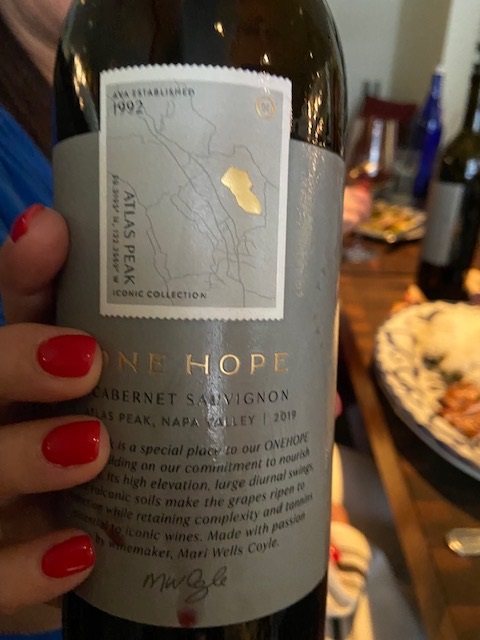
Iconic Collection Cabernet Sauvignon Atlas Peak 2019 – This wine from Edcora Vineyard in Atlas Peak is drinking beautifully right now. A longer growing season contributed to delicious ripeness in the fruit – reflected in the ripe black fruit flavors and aromas. The wine is big, rich, but balanced – a terrific reflection of the best of Napa.

ONEHOPE wines are available online here.


Tuesday, May 17, 2022

Feeling the love for expressive New Zealand wines from Loveblock


The world of wine is always changing, and the big, overblown New Zealand Sauvignon Blancs that were hugely popular over the past few decades are making way for more subtle interpretations of the grape. You can see this particularly in the newest releases from Loveblock, where organic farming practices are being increasingly applied. 

At a wine media dinner at Osteria La Baia, Erica Crawford, founder and CEO of Loveblock Wine, explained that organic farming is one of the factors that contributes to a more restrained Sauvignon Blanc. Rather than encouraging abundant growth through applications of fertilizers and clearing any other plants between vines, the Loveblock vines are made to struggle. So, no fertilizer is applied, and, also the vines compete for soil nutrients with the plants growing between the rows. Erica used the analogy of an only child who gets everything versus one who needs to share with many siblings – in other words, those vines are not getting spoiled.


Our dinner began, however, with a different grape—Pinot Gris. It’s fair to say that those of us in attendance fell in love with this wine. It was a luscious, aromatic interpretation, offering a crisp minerality, tart apple and pear, as well as a lovely acidity. This is a wine I’d happily drink on its own, and it was also delicious with the sea bass I had for a main course. In addition to seafood, I’d enjoy with poultry, pork, and light-sauced pastas.  Erica assured us that this wine “just gets better with age.”

Next we enjoyed the Loveblock Sauvignon Blanc. Erica told us that 82% of the vines are either organic or in the process of conversion to organic. I enjoyed the quieter aromatics that were still quite fresh with grassy, citrus notes and the wine’s flavors of lemon, tangerine, and white pepper – with refreshing acidity as well.  Erica noted that “Texture is quite a focus for us.” The vineyard management practices include using a cover crop between vines. 


A special new project for the Loveblock team is the introduction of a very different style of wine – Loveblock Tee.  This wine made of Sauvignon Blanc grapes has the addition of green tea tannin to preserve freshness, rather than the traditional addition of sulfites. On the nose and palate, we found clove and ripe red apple. The texture was more round than a traditional Sauvignon Blanc. Consumers who have an affinity for natural wines as well as those who wish to avoid sulfites will be interested in this unique wine. 

Our final wine was the Loveblock Pinot Noir. This was a delightful wine with floral aromatics, medium to light body, and tart cherry and cranberry flavors with low levels of well-integrated tannin. 

The Loveblock wines are delicious representations of what wines from Marlborough, New Zealand can become with careful vineyard management and intentional winemaking choices. With their beautiful botanical labels, they’re easy to spot on the shelf. For myself, I especially look forward to enjoying their sensational Pinot Gris again soon.

Sunday, April 24, 2022

Georges DuBoeuf Cru Beaujolais 2019 and 2020 Add to Growing Luster of Region


Living in the shadow of some of the world's most revered vineyards is something that may feel like a bit of a hardship, but the Beaujolais wines of Georges DuBoeuf are getting along just fine, thank you. In fact, the proximity to Burgundy's Cote d'Or is even garnering the region some accolades as a value choice from the area. 

Tasting through a number of 2020 and 2019 bottles from DuBoeuf's cru Beaujolais wines, I was pleased to note that they were a pleasure in their own right - and no comparison to other regions or styles was necessary. These are wines that are thoughtfully made and not trying to be anything other than terrific renderings of tangy, fresh, fruity Gamay.

It's always a pleasure to see Romain Teyteau, Export Director, North America for Les Vins Georges Duboeuf. Romain was in New York to show a selection of current releases at Benjamin Prime Steakhouse. 

I was thrilled that we began with the Domaine Beranger Pouilly-Fuisse 2019. Pouilly-Fuisse has always been one of my favorite whites, and this one was drinking beautifully with aromatic white flowers and honey on the nose and a round mouthfeel with yellow apples and cream on the palate. 

With an assortment of appetizers, we sampled the 2020 Georges Duboeuf Beaujolais-Villages. The 2020 vintage has been characterized as "warm and clean" and this Villages wine was a reflection of that - tart raspberry on the nose and palate with an easy appeal and no perceptible tannin. 

Moving on to our main courses (steaks all around) we began to explore the Cru Beaujolais wines of Georges DuBoeuf. 

The Chateau de Saint-Amour 2020 had more black fruit character than is often found. Romain explained that the winemaking involves both whole cluster and destemmed fruit, which produces wines of intensity while keeping the texture silky. 


Clos des Quatre Ventes Fleurie 2020 offered attractive aromas of tobacco and dried cherry. The fruit here is from a historic vineyard of 80-120 year old vines. The palate was full of tart cranberry and raspberry with bright acidity and low tannin. 

Domaine de Javernieres Cote du Py Morgon had a delicate nose of violets and raspberries. The soil here is a cumbly schist that encourages vines to root deeply bringing minerality to the wine. On the palate, raspberries and blackberries with a touch of balsamic are balanced by light spice. The wine has good length. 

Chateau des Capitans Julienas 2020 is full of ripe black cherry aromas and delivers the same on the palate, along with a hint of white pepper. Romain explained that the wine is made with some parcels going through carbonic maceration and others not. In addition, parts of the harvest are destemmed while others are whole cluster. The resulting wine has power and length while still maintaining elegance and low tannin. 

Domaine des Rosiers Moulin-A-Vent 2019 had delicious cherry and spice aromas that paid off on the palate. Cassis notes added to the lushness. This is a wine of depth that will age, defying the idea that Beaujolais should only be drunk young. 

It's always an education to drink through a number of the Cru Beaujolais villages. Each has its own special characteristics - some bolder, others more delicate, yet all quite special. These wines of Georges DuBoeuf reflect the pleasures that the 2019 and 2020 vintages have to offer and bring credit to the region. 


Saturday, April 23, 2022

Cultivating Time at Chateau Palmer Champagne


Chateau Palmer, a very English-sounding Champagne house, was in fact founded in 1947 by seven French grape growers. The owners had set their sights on the British market and chose what they considered to be a classy English name for their venture: "Palmer." Today the house is esteemed for the consistency and elegance of its cuvees. More than 50 percent of vineyards used by the Chateau are designated as Grand and Premier Cru vineyards located in the Montagne de Reims area which lies between the Marne and Vesle rivers. 

Today the house is dedicated to sustainability and has committed to providing sustainable protection of the vineyards for the sake of the wine, the grape growers and winemakers, the environment, and its customers. 

At a media dinner at Scarpetta, Raymond Ringeval, Export Director of Champagne Palmer & Co., led a small group through a tasting of some current releases as well as some rarer bottles. 

We began with the Brut Reserve NV which, according to Raymond, always has at least 50% Chardonnay. He told us that it is rare to have this much Chardonnay in this kind of blend, but that this "queen of grapes" is one of the signatures of Chateau Palmer, as they source from two of the Grand Cru villages where Chardonnay thrives. The Brut Reserve was crisp with fresh citrus notes as well as toasty brioche. It is aged four years on lees before bottling. 

Next we sampled the award-winning Blanc de Blanc made from 100% Chardonnay sourced from Premier Cru vineyards in the Montagne de Reims as well as from the Cote De Sezanne. Raymond explained that this was one of their most renowned Champagnes. Of special note is the aging these wines see; magnum bottles of the Blanc de Blanc spend 10 years on lees. The 750 ml bottle had 6 years on lees and had notes of crisp lemon, toast, and hazlenuts.  

These non-vintage Champagnes spend more time on lees than many, contributing to their complexity and roundness. In addition to the grapes and winemaking techniques, aging is another important factor in what makes these Champagnes special. According to Raymond, "We're cultivating time." 

The Rose Solera NV Champagne has 42% Chardonnay, 40% Pinot Noir, 10% Pinot Meunier, and there is the addition of 8% of Solera of Pinot Noir.  The solera was begun 40 years ago, and every year new wine is added to it. This unexpected addition is the source of extra richness and complexity. Of all the Rose Champagne I've had, none have made such an impression on me. There is a power to this wine, along with finesse. On the palate, straweberries, baking spice, and cream.  

The Vintage 2012 Champagne was very aromatic with notes of ripe pear and marzipan. On the palate there was great complexity and layers of marzipan, pear, and toasted almonds. The wine also had minerality and bright acidity. Raymond explained that the house only creates a vintage wine every 5-6 years. 


The next wine was a special cuvee known as Amazone. The name hearkens to the mythical race of women warriors and reflects the strength and elegance in the wine. The current release of Amazone is a blend of three top vintages - in this case 2012, 2009 and 2010 - as well as a solera Chardonnay. It spent 8 years on lees. The wine was dense with flavors of apple compote, baking spice, and marzipan. A delicious and unique cuvee. 

We ended the evening with the Vintage 1999 Chauteau Palmer Champagne. Raymond told us that vintage Champagne is part of the Palmer DNA.  This wine had aromas of dried fruits and toffee, which continued on the palate, along with minerality and a freshness that belied the wine's 23 years.  

Among the world of Champagne, Chateau Palmer is making wines that are distinct due to their high concentration of excellent Chardonnay in the cuvees as well for their penchant for long aging. I was impressed by the line, which had excellent choices for many moods and occasions - from parties to noteworthy anniversaries.    

Friday, April 22, 2022

Famille Bouey Celebrates Two Centuries in Bordeaux with Fresh Approach


Few wine regions are as steeped in tradition as Bordeaux. While this has had many benefits – being world-renowned for high quality wine is an enviable position—it has also created challenges for wineries wishing to create a new path in the region. For Famille Bouey, the answer is to respect the past while innovating for today’s wine consumers who want drinkable, fresh wines at value prices.

The Bouey family has been growing grapes and winemaking in Bordeaux’s Medoc region for two centuries, starting when Jean Bouey first planted vines there in 1821.  In recent years, the winery committed to an environmental management system, which shifted the vineyards away from artificial chemical treatments and towards biodiversity on their lands.

I had the opportunity to taste through much of the current Famille Bouey portfolio at a media dinner at the Capital Grille in midtown.  

Our introduction to the winery was an entry level wine called Oh la Vache! (holy cow!) 2020. Fun labeling and a fresh, accessible palate make this a crowd-pleasing red. It’s comprised of 85% Merlot and 15% Cabernet Sauvignon and has a fruit-forward character and no perceptible tannins.

Famille Bouey Cuvee 11 2019 is a wine made from 100% Merlot. 2019 was a good growing season that produced a wine redolent of blackberry, black plums, and raspberry flavors, as well as low tannin and fresh acidity. This wine is a great value at $12.99  The number eleven in the name is a nod to Jean Bouey’s first 11 hectares that he planted in 1821.

Famille Bouey Cuvee 20 2020 is 100% Cabernet Sauvignon. The number twenty in the name references when the fourth generation of the Bouey family joined the business in 2020.  This wine had fresh blackberries and balsamic notes on the nose and palate and well-integrated tannins. This young Cabernet could certainly age, and at $12.99 it would be great to see how it developed.

Family Bouey Cuvee 58 2019 is a blend of 80% Merlot and 20% Cabernet Sauvignon. This wine had a more complex aroma with blackberries and balsamic notes on the nose and a layered palate with black fruit and a hint of white pepper. It had considerable length and well-integrated tannin. I found this wine delicious – and what a great value at $14.99. The 58 in the name honors the year 1958 when Roger Bouey founded Maison Bouey.

Famille Bouey Les Parcelles No. 8 2020 is a blend of 80% Merlot and 20% Cabernet Franc. This wine had more structure with red fruit and cloves on the palate and silky tannins. The “parcelles” are single vineyard plots that have distinctive soils, from clay to chalky limestone. Ready to drink --or suitable to put away--it sells for $19.99.

Maison Blanche Merlot Cabernet 2020 blends the two most iconic grapes of the Bordeaux region. The wine has a nose of cherries and chocolate with firm tannins and nice length.  

I found that all the wines from Famille Bouey were fresh, with low tannins, and all seemed to have a straightforward approach that showcased the traditional grapes of Bordeaux. They are all priced well,  and I encourage wine lovers who may have shied away from Bordeaux in the past to definitely give them a try.

Sunday, April 10, 2022

Lugana Wines Shine at Il Gattopardo

Lugana wines are produced in northern Italy from the indigenous Turbiana grape. More specifically, the vineyards are located on the southern reaches of Lake Garda, Italy's largest lake. The lake helps to regulate temperature in the vineyards and provides a steady breeze that assists with grape health. The mineral-rich soil and numerous old vine vineyards contribute to the wines' unique flavor profiles. At a recent media event at Manhatan's Il Gattopardo, Lugana wines paired beautifully with an array of northern Italian dishes. 


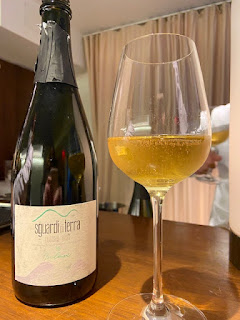
Our exploration of the region began with a flavorful sparkling wine, made in the traditional method,  Sguardi di Terra. Its golden color and persistent bubbles made for an inviting sparkling wine. 


For our first course of casconcelli, we sampled two whites from 2020 - the Citari Lugana Sorgente, which was aromatic with notes of pear and sage. The La Meridiana Lugana Organic was more floral in aroma with yellow plum flavors and salinity. 

With the second course of capu' ripiene di carne, we had the Tenuta Roveglia Limne, a wine of freshness, salinity and bright acidity. The Colli Vaibo Lugana 2019 had a more creamy texture with fresh acidity.  The third wine with this course was the Zeni Lugana Doc Vigne Alte 2019   - a delicious wine with riper notes of sweet green melon on the midpalate. 

With our third coruse of trota del Garda, we enjoyed the Seiterre Lugana Superiore 2018, a lean, focused wine with herbal notes of sage and chamomile as well as salinity and fresh acidity.  The meal ended with Zenato Riserva from 2016 - with six years of age, this wine was more golden in color, an aromatic, rich wine that felt reminiscient of young Burgundy. 

Throughout the luncheon, the strength of these northern Italian white wines clearly shone through. While every producer and every microterroir bring differences to each wine, they all are food friendly, fresh, and a welcome change from the workaday white wines that most consumers are more familiar with. 

As summer approaches and more seafood and lighter fare are served, Lugana wines make the perfect accompaniment to the fresher dining options of warm weather. 


Wednesday, March 23, 2022

Bodega Otazu Wows Wine and Art Lovers in Navarra


A 20-minute drive from the bustling city of Pamplona in northern Spain lies an incredible treat for wine and art lovers alike – Bodega Otazu. This Navarra winery is a must-visit for anyone who enjoys modern art and delicious wine.  

The scenic countryside surrounding the estate features softly rolling hills and abundant rows of vines used in the estate wines. The winery is housed within a grand historic building dating from 1840.  In order to preserve the lovely landscape, 70% of the facility is housed underground.


Upon entering the interior, I was immediately struck by a spectacular sculpture of a woman’s head. This large scale work conveyed strength, beauty, and elegance. It is also the image on many of Otazu’s wine labels. Then I was led through a long hallway featuring antique winemaking equipment and instructive displays that oriented visitors to the winery’s vineyard properties and wines.


My visit was part of an organized press tour by the Navarra wine region – but all tourists can make their own appointment for a 90 or 120 minute tour by visiting Otazu’s web site. To ensure your preferred date and time, it’s advisable to reserve in advance.


After viewing the entry area, visitors can tour the extensive art collections within the property. Our guide told us that the current owners have established an art foundation and believe that wine is “the only art you can drink.”  I was particularly excited to learn about the many artists who have collaborated with the winery to produce one of a kind pieces that are on display.  These are works that cause an array of emotions – from pleasurable to provocative. There is also a premium level wine available in packaging that is itself a work of art – a truly unique experience for wine collectors.


I always love unique wine tourism experiences, and Bodega Otazu’s art-centric experience was truly one of the best I’ve had.  Even the large barrel room featured original works. Some of these were works that were created using the winery’s barrels, including a barrel with lights in a star-shaped configuration hanging from the ceiling. The lights could be activated by placing your finger on a sensor and then they would shine in rhythm to your heartbeat – an incredible experience.


But Bodega Otazu offers more than just unique art.  I was able to taste through many of their current releases as noted below:

Palacio de Eirada Chardonnay 2021 – A crisp, clean wine with fresh citrus aromas, appealing lemon notes, and refreshing acidity.

Pago de Otazu Chardonnay 2019 – A hand-harvested, limited edition Chardonnay with pear on the nose and palate, a round mouthfeel, rich toffee notes, and a long finish.

Rosado Merlot 2021 – This was a fresh rose with bright red fruit notes on the palate and a nose of bacon and red candy. 

Premium Cuvee 2019 – This wine is a blend of Cabernet Sauvignon, Tempranillo, and Merlot. It’s aged in oak for 12 months and rests another 14 months in bottle.  The wine offered aromas of black cherry, and on the palate there was a plush mouthfeel, gentle tannins and black and red fruit flavors – for an overall pleasing and not heavy red.

2019 Pago de Otazu Tinto – A blend of Merlot, Cabernet Sauvignon and Tempranillo, this wine sees longer aging before being released – 18 months in barrel and another 36 in bottle.  It’s a very aromatic wine with ripe red fruit notes and well-integrated tannins – a wine that can age.

2010 Altar – Our group was lucky to taste an older vintage – this one was 100% Cabernet Sauvignon. The wine was fragrant with black plum and minerality, with a flavor of blackberry compote and slight balsamic notes, well-integrated tannins and a long finish. A delicious wine to drink now or hold.

My overall impression of Otazu is that I would recommend a visit to anyone in the Navarra region or who wants to take a drive over to Navarra during a trip to Spain.  I also will be looking for Otazu wines on the shelf as they offer delicious value.