Sunday, January 15, 2023

Georges Duboeuf Beaujolais Nouveau Also a Refreshing Winter Treat


Can you drink Beaujolais Nouveau after Thanksgiving time when it's released? Mais oui! 

Most sources suggest you can enjoy Beaujolais Nouveau wines from six to 12 months after their bottling, which means that when you want to reach for a refreshing light red this winter, you can still enjoy your Beaujolais Nouveau! 

Beaujolais Nouveau and Les Vins Georges Duboeuf

Franck Duboeuf, who runs Les Vins Georges Duboeuf and is the son of the house's founder Georges, was in New York City to celebrate Beaujolais Nouveau day this November. This year he celebrated with a media lunch at Quality Bistro, where he poured a range of the house's Beaujolais Nouveau. 

The idea of promoting the new wine of the Beaujolais harvest came from his father, Georges, and has grown into a phenomenon that is celebrated world wide on the third Thursday of November. This year, the wines were fresh and flavorful. 

And, even though many regard the young wine as being a Thanksgiving staple, there's no reason not to have some bottles on hand for the months after their release. Stock is still available, and there's no denying the appeal of the red fruit palate and light body. 

The line of Beaujolais Nouveau wines are mostly light-bodied reds, but for the past couple years Dubouef has also released a delightful rose, which Franck admitted is "not an easy wine to produce."  


2022 Beaujolais Vintage

The 2022 Beaujolais vintage saw the hottest summer ever recorded in France, with long dry stretches as well as strong storms. Harvest began August 17th, a month earlier than in 2021, with perfectly ripe grapes. This year's wines are full of tart cherry, cranberry, and the hint of herbs like thyme anchored by good acidity.    

Beaujolais Nouveau for a lighter winter wine

Just as drinking sparkling wine is a great change of pace from the heavier reds we normally pour in winter, so too can drinking Beaujolais Nouveau provide your palate with a fresh, flavorful departure from the big winter reds in many glasses.


Tuesday, December 27, 2022

Yountville's Reinvigorated Goosecross Winery Creates Vineyard-Driven Wines


Dave and Christi Ficeli met while working at the historic California winery, E. & J. Gallo. In 2021, they fufilled their dream of owning their own piece of Napa Valley wine history by acquiring Goosecross winery, which they had been managing since 2013. Since the beginning of their involvement with the winery, the couple was determined to create a special destination that offers memorable, terroir-driven wines. 

Essential to this vision is Goosecross winemaker Bill Nancarrow, a New Zealand native whose illustrious wine career has taken him all over the world. His most recent position prior to Goosecross was being executive winemaker of Duckhorn Wine Company's Napa Valley properties. After rising to the executive ranks, Bill said he wanted to get his hands dirty, drive a tractor, and make wine again. Goosecross gave him that chance. Bill is passionate about selecting vineyard sites, as Yountville has diverse soil profiles in every direction. With the Ficeli's vision and Bill's winemaking skill, Goosecross has blossomed. 


I met Dave and Bill at a recent media dinner in Manhattan at Marta, where I was able to hear about how Goosecross has been transformed into a destination winery focused on sustainable viticulture and complex, balanced wines. They poured a number of wines that we paired with the restaurant's crispy pizzas with a variety of fun toppings - from fresh corn to black truffles. Here are some highlights from the wines we sampled: 


Goosecross 2019 State Lane Vineyard Merlot - State Lane is the vineyard on the Goosecross property which features diverse alluvial soils and temperatures moderated by the San Francisco Bay. This Merlot combines fruit from two distinct blocks, producing a wine with ripe cherry aroma and flavor, bright acid, fine-grained tannins, and a whiff of caramel on the finish. 

2019 Goosecross Holly's Block Cabernet Sauvignon - The vineyard block is named after Christi's grandmother, Holly, and it's a winery favorite. 2019 was a generous year weather-wise, and this is reflected in the rich blackberry jam flavors, silky tannins, and persistent finish. I was delighted by this elegant, plush wine. 

2019 Goosecross State Lane Aeros - The best of the best from the State Lane Vineyard, this wine is blend of 65% Cabernet Sauvignon and 35% Merlot. This is a structured wine with great ageing potential that was still drinking well at its young age. I found plum and blackberry on the nose and palate and enjoyed its rich mouthfeel. The wine is limited to 145 cases.  

Wines may be ordered directly online, but the best way to experience the wines is by visiting them at the welcoming tasting room or on the patio in Napa Valley. Goosecross offers wine tastings, wine and food pairings, and special events. Find out more on the winery's website.  


Naturally Bordeaux Dinner Showcases Sustainability-Minded Chateaux Creating Beautiful Wines


The prestigious wine region of Bordeaux produces many of the most renowned wines in the world, although producing healthy vines in a maritime climate has often led vineyard managers to turn to chemical and pesticide intervention. Happily, for the past 15 years the region has been moving away from these practices. 

Nowhere is that more evident than in the three chateaux participating in the current Naturally Bordeaux campaign -  Chateau Fourcas Hosten, Chateau de la Dauphine, and Chateau Jean Faure. At a media dinner at Clay restaurant in Harlem, representatives from the three wineries were on hand to pour their wines and discuss their environmental programs.These include efforts to regenerate the land in addition to shunning chemical intervention. 

The resulting wines being produced under strict conservationist practices are a testament that delicious, age-worthy wine can be made in an environmentally sensitive way. 

For example, Chateau Fourcas Hosten began a program to be HVE3 certified beginning with the 2017 vintage. HVE (Haute Valeur Environmentale) is a three-tiered program aimed at decreasing negative environmental impact of disease control, managing fertilizer inputs, and improving water management. HVE3 is the highest level of sustainability in this program.  

At Chateau de la Dauphine, a new program brings 200 sheep from the Aspe Valley to live on the organic, biodynamic vineyard for six months. This program contributes to the biodiversty of the vineyard, gives the sheep access to pesticide-free grazing , and provides the vineyard with natural fertilizer and mowing between vines.  

Chateau Jean Faure is a certfied organic vineyard whose 2023 vintage will be certified by Biodyvin, a biodynamic certification organization. Among its efforts to create a healthy,  sustainable winery, the chateau uses organic preparations, natural herbal infusions, as well as horses to pull plows.   

Among the wines poured during the dinner, my favorites included: 

Chateau de la Dauphine Rose 2021, Fronsac - Comprised of Merlot and Cabernet Franc, this rose had crisp acidity, crushed ripe strawberries on the palate, and a hint of baking spice. 

Chateau Fourcas Hosten 2018, Listrac-Medoc - A blend of Merlot, Cabernet Sauvignon, Petit Verdot, and Cabernet Franc, this medium-bodied wine had a nose of tart cranberry and basalmic with flavors of ripe black cherry. 

Chateau de la Dauphine 2012, Fronsac - A blend of Merlot and Cabernet Franc, this still-youthful wine was inky dark and offered gorgeous blackberry flavors, wonderful balance, fine tannins, and a long finish. 

Chateau Jean Faure 2010, St. Emilion Grand Cru - A blend of Cabernet Franc, Merlot, and Malbec, this wine had a nose of cherry and forest floor with tart cherry and basalmic notes, fine tannins, and long finish.   

This instructive wine dinner truly proved that organic farming and sustainability can lead to the creation of spectacular wines.  The wines of Chateau de la Dauphine, Chateau Fourcas Hosten, and Chateau Jean Faure are all available in the U.S.  For information on specific wines, I recommend checking www.winesearcher.com.  


Monday, September 5, 2022

Navarra's Inurrieta Winery Brings Fresh Approach to History of Family Winemaking


The region of Navarra lies in the northeast corner of Spain. While it's a land where the past glory of the Kingdom of Navarra still feels vividly alive, the region today also boasts innovative winemakers looking to bring a fresh approach to ancient practices.

On my trip to Navarra this year, I visited Bodega Inurrieta as part of group of trade and media. The Inurrieta name refers to the place where the owner's family grew grapes nearly a century ago.

On the way, we stopped in the picturesque village of Olite, where an ancient fortress was being used as the backdrop for a new series "Vampire Academy." What would we find at the winery, our group wondered... Ghouls and goblins among the Garnacha?

Bodega Inurrieta lies in the Ribera Alta, one of five winemaking regions of Navarra. The region accounts for one third of the production of Navara.  When we arrived, we were happy to see a bright, modern, airy winery.  Walking over the metal catwalk that overhung the stainless steel tanks, we were assured that we were very far from any ghouls.


As we settled in a spacious table lined with full length windows that showed the vineyards and forests outside, we were walked through the bodega's current releases. Some of my favorite wines from our visit are assessed below:

The 2021 Inurrieta Orchidea is 100% Sauvignon Blanc. The wine was very aromatic with fresh gooseberry and citrus notes. On the palate, there was lemon and a hint of pinepple with a backbone of acidity and a touch of minerality on the finish. I didn't expect to enjoy a Spanish Sauvignon Blanc so much, but this was a wine that won a gold medal at the Concours Mondial du Sauvignon among other accolades. 

We tasted the Inurrieta Coral, a rosado comprised of a 60% Cabernet Sauvignon and 40% Garnacha. This was a lovely rose with notes of strawberries and a lift of acidity. A darker rose wine came next - Mediodia. This was a richer version of rose with more savory notes -- delicious for summer and beyond.  


Next came several hefty red blends that showcased the power that red wines can have in this region. Inurrieta Sur 2020 is a blend of Cabernet Sauvignon/Merlot  which spends 7 months in American oak. It was a beautifully balanced wine with plums and a bit of bacon on the nose. It had a rich mouthfeel with dark fruit and a hint of spice. Well-integrated tannins made this delicious to drink now, but I would certainly age this as well.

My favorite wine was the Inurrieta Mimao 2020, 100% Garnacha. The grapes get a cold soak for 8 days when they come in to retain freshness and flavor. After the first round of fermentation occurs in stainless steel tanks, Malolactic fermentation takes place in used French oak barrels, where the wine rests for 7 months. The resulting care produces a wine of fresh red and black berry flavors, round mouthfeel, and lingering finish.


During our visit, we enjoyed some delicious local treats including smoked meats, hard cheeses, and white asparagus -- a great start to our day of wine touring in the area. 

Inurrieta welcomes visitors and is just a 40 minute drive from Pamplona. 

Monday, July 4, 2022

Chilean Wines that Capture the Spirit of the Vines from Ritual, Primus & Neyen


Sofía Araya has enjoyed a thriving career in Chilean wine since graduating from la Universidad de Chile, and today she serves as head winemaker for several prestigious Chilean wineries. At a recent media dinner, she led a tasting of a selection of organically-farmed wines with the Ritual, Primus, and Neyen labels.

During the evening, Sofía conveyed that her focus is on letting the grapes and the land where they’re grown shine. The first wines we tasted were from Ritual, which pays homage to vineyard workers by featuring them on the labels. 


Ritual Sauvignon Blanc was a fresh wine with lively aromas of gooseberry, notes of lemon mousse on the palate, surprising body, and good acidity. Sofía uses some whole clusters in the crush as well as barrel fermentation to add complexity to this wine. $21

Ritual Pinot Noir was a medium to light bodied wine with ripe red cherry flavors with notes of sage and white pepper. It’s created with native yeast in the fermentation. $21

The Primus Carmenere is from vines that are 25 years old as well as some older vines approaching 80-90 years. Sofía believes that Carmenere grapes benefit immensely from these older vines. This wine had blackberry and toffee on the nose and palate, along with spicy pepper notes. $21

Primus Red Blend had a nose of black and red fruit with a hint of green pepper. On the palate the wine offered black fruit with notes of rosemary. It had good length, smooth tannin, and balance. $21  


Neyen is a wine label named for the spirit of Alpata, the esteemed region within the Colchagua Valley.  The grapes for the wines from this label are sourced from old terraces of the Tinguiririca River.

The Neyen wine is a blend of Carmenere and Cabernet Sauvignon. The wine had rich aromas of blackberries and cherries with hints of rosemary. The wine was full bodied with rich fruit as well as a note of balsamic and toffee on the back end. It was a truly gorgeous wine that I would love to see with age. $65

The Neyen Malbec is a special wine that showcases how Malbec on the other side of the Andes can fare. This wine offered delicate aromas of roses and red candies, and the palate had both structure and freshness with ripe Bing cherry flavors and fine tannins.  $150

All of the wines made under Sofía Araya had a freshness and a focus to them – the flavors had a purity that winemaking only sought to enhance without hiding anything. I appreciated these well-crafted wines, which further strengthened my contention that wines from Chile offer both value and quality to wine lovers.  

Monday, May 30, 2022

Carmenere Cowboys from TerraNoble Wrangle Pairings with Aplomb


One of the most fun parts of being a wine lover is playing around with pairings. And the “Carmenere Cowboys” from TerraNoble winery were in NYC recently to do just that – with the lively culinary offerings of Citizens at Manhattan West to choose from. The enjoyable evening was eye-opening with regards to the pairing possibilities of Chilean wine.  

The winery’s name, TerraNoble, refers to the Maule Valley’s fine soils that can produce great wines. The winery has vineyards across the Casablanca, Colchagua, and Maule Valleys of Chile. The winery’s guiding philosophy is one of minimum intervention. Winemaker Marcelo Garcia’s practices reflect that, favoring aging in more neutral containers such as large format foudres or concrete eggs.


Our evening began with TerraNoble Grand Reserve Carmenere 2018 served with spicy tuna crispy rice. The spicy kick to the tuna tartare made this a delicious match to the wine’s notes of cranberry, herbs, and white pepper.

Next was some hard Parmigiano Romano paired with Grand Reserve Carignan 2018. This wine was a surprise to me, as I’m not sure if I’ve had Carignan from Chile before. The nose was lovely with floral notes of violets and rose. On the palate there were bold cherry and hints of dark chocolate with bright acidity. A wine I will keep an eye out for. The salty, fatty cheese was well suited to the wine’s fresh acidity.

Our third course paired crisped pork gyoza with the Grand Reserve Cabernet Sauvignon 2018.  The wine had aromas of dried cherries and eucalyptus. On the palate, there was cranberry and a hint of balsamic and black pepper. The wine’s spicy notes and integrated tannins complemented the fatty pork of the gyoza well.


Our fourth course was quite a showstopper – Flintstone-size sticky ribs. The ribs were gorgeous by themselves, but when paired with the TerraNoble CA2 2018, the course took on a new dimension. CA2 is Carmenere sourced from a cooler region with a maritime influence. It has some green pepper dimensions to the nose and palate, and that herbaceous quality was terrific with the fatty, sweet ribs – like another spice added to the plate. 

The dessert course was a surprise – an enormous salted truffle cookie that was rich with deep cocoa flavor. The generous sprinkling of salt on top and the fact that the cookies weren’t very sweet made them an unexpectedly good pairing with TerraNoble CA1 2018. Also a Carmenere, this wine is grown in warmer foothills of the Andes and therefore had more concentration of deep cherry flavors that complemented the chocolate well.

A final bonus wine wrapped up the evening nicely – Lahuen. This Bordeaux-style blend includes Cabernet Sauvignon, Carmenere, Cabernet Franc and Malbec.  It was an elegant wine with fresh blackberry, cherry and hints of rose with well-integrated tannins.

The "cowboys" from TerraNoble were charming hosts to us and led the tasting with warm hospitality. The evening truly demonstrated that Chilean wines are wonderfully versatile – and that the wines of TerraNoble are particularly fun to pair. 

Sunday, May 29, 2022

Delicious with a Dash of Do-Good - ONEHOPE Wines from Napa Valley


California winemaking has gone through many phases since the earliest pioneers who shone in the tasting of Paris in 1976. From hugely powerful wines heavily impacted by new oak aging, and the waxing popularity of Pinot Noir and waning appeal of Merlot (thanks, Sideways) to the ABC (anything but Chardonnay) advocates. Today there is a move towards letting the grapes shine, managing alcohol levels, and always looking for the best parcels from which to source grapes.

The new hunt for freshness in the resulting wines is a decided boon for wine lovers who are looking for varietal expression, more acidity, while still wishing for complexity and richness. Mari Wells Coyle is vice president of winemaking and estate operations at ONEHOPE Winery in Napa Valley, and, under her stewardship, the wines are delivering lovely quality of fruit, more balance, and delicious, complex flavors.

But ONEHOPE is more than just a top notch wine producer – the Rutherford winery was founded 15 years ago with the mission to give back. For each purchase, the winery donates 10% of the price to customers’ chosen nonprofits. Today the winery has donated over $8 million.  It’s an outstanding achievement that makes drinking well and doing good easy.


Mari was in NYC for a media lunch at Marta, where she walked us through a number of current releases.

Estate 8 Fume Blanc Rutherford 2020 – Rutherford fruit that sees a mix of new and used oak barrel aging produces a luxurious white with floral and herbal aromas, white plum flesh and toffee on the palate, a round mouthfeel and long finish. A very special wine.

Reserve Collection Chardonnay Napa Valley 2020 – Although the vintage was growing during some times of fire, the fruit was clean and so wine could be produced. This had a fresh nose of orange blossom and the citrus continued on the palate along with honeyed toffee notes on the backend. The balance of acidity and richness makes this wine a delight.

Reserve Collection Pinot Noir Russian River 2020 – Lush strawberry jam and dried roses on the nose with dark cherry flavor and well-integrated tannins. A more delicate Pinot Noir that still had satisfying flavors and length.

Reserve Collection Zinfandel Amador 2020 – I was pleased to see that this Zin avoided the heaviness that is often seen from the grape in California.  There was an appealing blackberry nose and rich black fruit with a touch of spice on the palate with a full body.

Naturally, the Cabernet Sauvignons were a highly anticipated part of the tasting and they did not disappoint:  

Iconic Collection Cabernet Sauvignon Oakville 2017 – Redolent of blackberries on the nose and palate with hints of baking spice and a long finish.

Iconic Collection Cabernet Sauvignon Oakville 2018 – A cooler growing season resulted in a wine with slightly more herbal and rose tones on the nose. The wine delivers black and red fruit on the palate and tight tannins.  


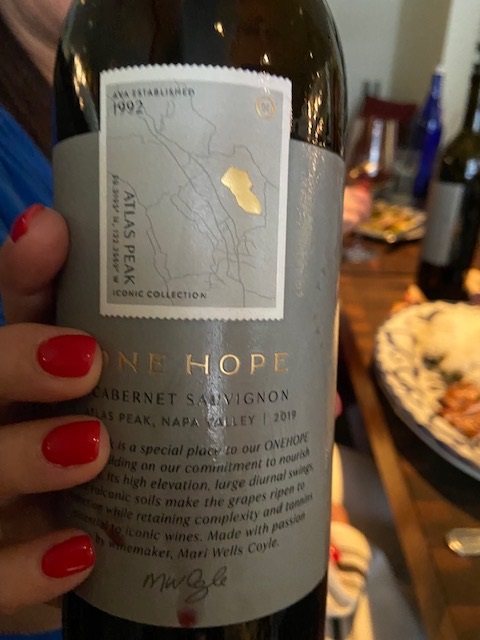
Iconic Collection Cabernet Sauvignon Atlas Peak 2019 – This wine from Edcora Vineyard in Atlas Peak is drinking beautifully right now. A longer growing season contributed to delicious ripeness in the fruit – reflected in the ripe black fruit flavors and aromas. The wine is big, rich, but balanced – a terrific reflection of the best of Napa.

ONEHOPE wines are available online here.