Friday, April 22, 2022

Famille Bouey Celebrates Two Centuries in Bordeaux with Fresh Approach


Few wine regions are as steeped in tradition as Bordeaux. While this has had many benefits – being world-renowned for high quality wine is an enviable position—it has also created challenges for wineries wishing to create a new path in the region. For Famille Bouey, the answer is to respect the past while innovating for today’s wine consumers who want drinkable, fresh wines at value prices.

The Bouey family has been growing grapes and winemaking in Bordeaux’s Medoc region for two centuries, starting when Jean Bouey first planted vines there in 1821.  In recent years, the winery committed to an environmental management system, which shifted the vineyards away from artificial chemical treatments and towards biodiversity on their lands.

I had the opportunity to taste through much of the current Famille Bouey portfolio at a media dinner at the Capital Grille in midtown.  

Our introduction to the winery was an entry level wine called Oh la Vache! (holy cow!) 2020. Fun labeling and a fresh, accessible palate make this a crowd-pleasing red. It’s comprised of 85% Merlot and 15% Cabernet Sauvignon and has a fruit-forward character and no perceptible tannins.

Famille Bouey Cuvee 11 2019 is a wine made from 100% Merlot. 2019 was a good growing season that produced a wine redolent of blackberry, black plums, and raspberry flavors, as well as low tannin and fresh acidity. This wine is a great value at $12.99  The number eleven in the name is a nod to Jean Bouey’s first 11 hectares that he planted in 1821.

Famille Bouey Cuvee 20 2020 is 100% Cabernet Sauvignon. The number twenty in the name references when the fourth generation of the Bouey family joined the business in 2020.  This wine had fresh blackberries and balsamic notes on the nose and palate and well-integrated tannins. This young Cabernet could certainly age, and at $12.99 it would be great to see how it developed.

Family Bouey Cuvee 58 2019 is a blend of 80% Merlot and 20% Cabernet Sauvignon. This wine had a more complex aroma with blackberries and balsamic notes on the nose and a layered palate with black fruit and a hint of white pepper. It had considerable length and well-integrated tannin. I found this wine delicious – and what a great value at $14.99. The 58 in the name honors the year 1958 when Roger Bouey founded Maison Bouey.

Famille Bouey Les Parcelles No. 8 2020 is a blend of 80% Merlot and 20% Cabernet Franc. This wine had more structure with red fruit and cloves on the palate and silky tannins. The “parcelles” are single vineyard plots that have distinctive soils, from clay to chalky limestone. Ready to drink --or suitable to put away--it sells for $19.99.

Maison Blanche Merlot Cabernet 2020 blends the two most iconic grapes of the Bordeaux region. The wine has a nose of cherries and chocolate with firm tannins and nice length.  

I found that all the wines from Famille Bouey were fresh, with low tannins, and all seemed to have a straightforward approach that showcased the traditional grapes of Bordeaux. They are all priced well,  and I encourage wine lovers who may have shied away from Bordeaux in the past to definitely give them a try.

Sunday, April 10, 2022

Lugana Wines Shine at Il Gattopardo

Lugana wines are produced in northern Italy from the indigenous Turbiana grape. More specifically, the vineyards are located on the southern reaches of Lake Garda, Italy's largest lake. The lake helps to regulate temperature in the vineyards and provides a steady breeze that assists with grape health. The mineral-rich soil and numerous old vine vineyards contribute to the wines' unique flavor profiles. At a recent media event at Manhatan's Il Gattopardo, Lugana wines paired beautifully with an array of northern Italian dishes. 


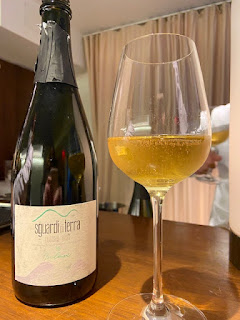
Our exploration of the region began with a flavorful sparkling wine, made in the traditional method,  Sguardi di Terra. Its golden color and persistent bubbles made for an inviting sparkling wine. 


For our first course of casconcelli, we sampled two whites from 2020 - the Citari Lugana Sorgente, which was aromatic with notes of pear and sage. The La Meridiana Lugana Organic was more floral in aroma with yellow plum flavors and salinity. 

With the second course of capu' ripiene di carne, we had the Tenuta Roveglia Limne, a wine of freshness, salinity and bright acidity. The Colli Vaibo Lugana 2019 had a more creamy texture with fresh acidity.  The third wine with this course was the Zeni Lugana Doc Vigne Alte 2019   - a delicious wine with riper notes of sweet green melon on the midpalate. 

With our third coruse of trota del Garda, we enjoyed the Seiterre Lugana Superiore 2018, a lean, focused wine with herbal notes of sage and chamomile as well as salinity and fresh acidity.  The meal ended with Zenato Riserva from 2016 - with six years of age, this wine was more golden in color, an aromatic, rich wine that felt reminiscient of young Burgundy. 

Throughout the luncheon, the strength of these northern Italian white wines clearly shone through. While every producer and every microterroir bring differences to each wine, they all are food friendly, fresh, and a welcome change from the workaday white wines that most consumers are more familiar with. 

As summer approaches and more seafood and lighter fare are served, Lugana wines make the perfect accompaniment to the fresher dining options of warm weather. 


Wednesday, March 23, 2022

Bodega Otazu Wows Wine and Art Lovers in Navarra


A 20-minute drive from the bustling city of Pamplona in northern Spain lies an incredible treat for wine and art lovers alike – Bodega Otazu. This Navarra winery is a must-visit for anyone who enjoys modern art and delicious wine.  

The scenic countryside surrounding the estate features softly rolling hills and abundant rows of vines used in the estate wines. The winery is housed within a grand historic building dating from 1840.  In order to preserve the lovely landscape, 70% of the facility is housed underground.


Upon entering the interior, I was immediately struck by a spectacular sculpture of a woman’s head. This large scale work conveyed strength, beauty, and elegance. It is also the image on many of Otazu’s wine labels. Then I was led through a long hallway featuring antique winemaking equipment and instructive displays that oriented visitors to the winery’s vineyard properties and wines.


My visit was part of an organized press tour by the Navarra wine region – but all tourists can make their own appointment for a 90 or 120 minute tour by visiting Otazu’s web site. To ensure your preferred date and time, it’s advisable to reserve in advance.


After viewing the entry area, visitors can tour the extensive art collections within the property. Our guide told us that the current owners have established an art foundation and believe that wine is “the only art you can drink.”  I was particularly excited to learn about the many artists who have collaborated with the winery to produce one of a kind pieces that are on display.  These are works that cause an array of emotions – from pleasurable to provocative. There is also a premium level wine available in packaging that is itself a work of art – a truly unique experience for wine collectors.


I always love unique wine tourism experiences, and Bodega Otazu’s art-centric experience was truly one of the best I’ve had.  Even the large barrel room featured original works. Some of these were works that were created using the winery’s barrels, including a barrel with lights in a star-shaped configuration hanging from the ceiling. The lights could be activated by placing your finger on a sensor and then they would shine in rhythm to your heartbeat – an incredible experience.


But Bodega Otazu offers more than just unique art.  I was able to taste through many of their current releases as noted below:

Palacio de Eirada Chardonnay 2021 – A crisp, clean wine with fresh citrus aromas, appealing lemon notes, and refreshing acidity.

Pago de Otazu Chardonnay 2019 – A hand-harvested, limited edition Chardonnay with pear on the nose and palate, a round mouthfeel, rich toffee notes, and a long finish.

Rosado Merlot 2021 – This was a fresh rose with bright red fruit notes on the palate and a nose of bacon and red candy. 

Premium Cuvee 2019 – This wine is a blend of Cabernet Sauvignon, Tempranillo, and Merlot. It’s aged in oak for 12 months and rests another 14 months in bottle.  The wine offered aromas of black cherry, and on the palate there was a plush mouthfeel, gentle tannins and black and red fruit flavors – for an overall pleasing and not heavy red.

2019 Pago de Otazu Tinto – A blend of Merlot, Cabernet Sauvignon and Tempranillo, this wine sees longer aging before being released – 18 months in barrel and another 36 in bottle.  It’s a very aromatic wine with ripe red fruit notes and well-integrated tannins – a wine that can age.

2010 Altar – Our group was lucky to taste an older vintage – this one was 100% Cabernet Sauvignon. The wine was fragrant with black plum and minerality, with a flavor of blackberry compote and slight balsamic notes, well-integrated tannins and a long finish. A delicious wine to drink now or hold.

My overall impression of Otazu is that I would recommend a visit to anyone in the Navarra region or who wants to take a drive over to Navarra during a trip to Spain.  I also will be looking for Otazu wines on the shelf as they offer delicious value.


Tuesday, January 4, 2022

Toasting 2022 with Italian Wine Pairings


Italian cuisine has a timeless appeal – and with so many rich sauces and ragus, tempting pasta shapes, airy pizzas, fresh fish, rich polentas, creamy risottos, and more, it’s easy to see why. Americans enjoy a lot of Italian food – in fact, one survey said that the average US consumer enjoys over 15 pounds of Italian cheese a year!

And Italian cuisine is perfect for dinner parties – for example, pasta recipes can easily be modified to serve more or less guests.  A fun entertainment idea for the new year is to host your own Italian night with a multi-course celebration featuring all Italian wines.

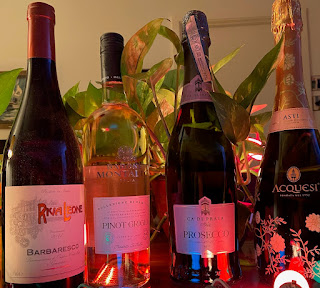
It’s always great to start the evening with something sparkling – a time-honored way to welcome guests as they enter your home in Europe.  The Ca Di Prata Brut Prosecco DOC ($16) is a great choice with crisp pear and apple flavors, lots of fine bubbles, and delightful acidity.  Passed trays of fresh salami and hard pecorino cheese (need inspiration on a building a cheese board? look here) would work well to start the evening off.

After everyone arrives, it’s time to sit down for the first course. A risotto with parmesan and lemon (see recipe here) is a crowd-pleasing first course that would match beautifully with the Barone Montalto Pinot Grigio 2020 ($12), a dry white wine with hints of citrus on the palate.  And your guests will be intrigued that this Pinot Grigio is not from northern Italy, but Sicily!

After the risotto has disappeared, it’s time for the main attraction – a roast loin of pork rubbed with olive oil and rosemary. The wine to pair is one of Italy’s iconic selections – a Barbaresco made from 100% Nebbiolo grapes. The Riva Leone Barbaresco 2017 is a perfect choice, as its complex flavors of dried red fruits and spice will complement the juicy pork wonderfully. At only $25, it’s a great value as well.

While some of your guests may say they don’t have room for dessert, they’ll certainly be persuaded to have a slice of this traditional semolina cake and a last glass of something lightly sweet. The Acquesi Asti Spumante ($18) is 100% Moscato from Friuli. Its lightly sweet flavor and lovely perfumed nose will create a sweet and sparkling ending to your night of Italian fun!

Monday, January 3, 2022

Celebrating Charming Abruzzo and Bordeaux Wines at Il Gattopardo


New York at Christmas time is a treat, and the same can be said about a meal at the midtown East restaurant Il Gattopardo, which specializes in southern Italian cuisine. I had the opportunity to attend a wine media lunch there where we sampled a wide range of wines from Abruzzo during the main courses as well as a trio of sweet wines of Bordeaux with dessert. 

The alluring combination of quality dry and sweet wines from two different EU countries is part of the Charming Taste of Europe promotional program, which doesn’t limit its celebration of European wine to a single area. 

While some Abruzzo wines are not as well-known as those of Tuscany or Piedmont, their wallet-friendly prices, delicious flavor profiles, and intriguing indigenous grapes should put this Italian region on wine lovers' radar. 

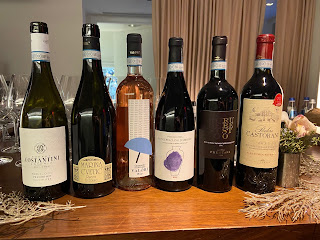
Our meal began with one such variety – the lively Pecorino grape. The Poderi Constantini Antonio Abruzzo Pecorino Superiore 2020 was a crisp wine with dried herbs on the palate, as well as notes of chamomile and a touch of minerality. Pecorino is a food-friendly white with a unique flavor profile -- worth seeking out as an alternative to Sauvignon Blanc and Chardonnay. 

With the first course of  spaghetti alla Chitarra, we sampled a white wine from the Trebbiano grape, the Masciarelli Tenute Agricole, Marina Cvetic, Trebbiano d’Abruzzo Riserva 2019, which had a crisp nose reminiscent of fresh cut celery with sage, green melon, and minerality on the palate. We also tried a rosata, the Valori, Abbruzo Talamonti Cerasuolo Rose 2020. This had more heft than many roses with a nose of cranberry, good structure, and tart fruit flavors. 

The second course of patate maritate (potatoes with sausage), was paired with the Francesco Cirelli Montepulciano d’Abruzzo 2019, a biodynamic wine made in amphora. All Montepuliciano d'Abruzzo wines must contain at least 85% of Montepulciano grapes. This had powerful black fruit and balsamic vinegar aromas and deep flavors of black plums and black pepper, as well as perceptible tannin. 

The flavorful fish soup course -- “brodetto alla Vastese” – needed robust wine to match it, and the answer was two substantial reds. The Cantina Frentana Montepulicano d’Abruzzo “Rubesto” 2017 was a big wine with blackberry and caramel on the nose and lots more blackberries on the palate. The last Abruzzo wine was the Podere Castorani Montepulciano d’Abruzzo Casauria Riserva 2015. This wine had a savory rosemary nose and dried cherries dusted with sage on the palate. This wine is truly made with care – it’s harvested late (in November) and has a long maceration period of up to 30 days to increase complexity.


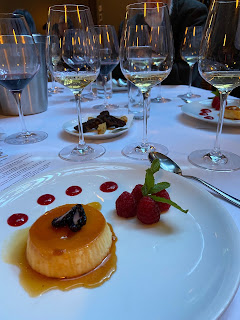
The light dessert course of lattacciolo was served with three sweet wines of Bordeaux. Although Sauternes is the most famous (and pricey) example, Bordeaux sweet wines come from several appellations in the larger Bordeaux area. The Chateau de Garbes “Cuvee Fut de chene” AOC Cadillac 2019 had a lovely honey nose with honeysuckle on the palate. The Chateau Fayau Premieres Cotes de Bordeaux 2019 also had honey aromas with a richer marmalade palate. The most luxurious selection was the Chateau Loupiac-Gaudiet AOC Loupiac 2017. The nose was full of ripe apricots and the wine had a rich texture and a long finish. 

Cheers to the Charming Taste of Europe for showcasing a large selection of delicious Italian and French wines in a fabulous, fun lunchtime tasting.  The wines we tried at Il Gattopardo from Abruzzo and Bordeaux are certainly worthy of your attention in the new year.


Tuesday, December 21, 2021

Intriguing Romanian Wines Have Appeal for Curious Wine Lovers


The world of wine seems to get wider all the time, as new countries offer exciting indigenous grapes to a curious American market. I recently attended a media lunch at Avra Estiatoria hosted by Marinela Ardelean, ambassador to the Open the Romanian Wine program. This eastern European country offers Americans unique varieties, sophisticated winemaking, and new flavors to explore -- all while boasting a winemaking tradition that goes back 6000 years. Romania has seven wine regions with nearly 500 wineries that grow 165 grape varieties. At this media lunch, Marinela only selected wines made from native grapes for us to sample. 


The first was a sparkling wine, The Iconic Estate's Rhein Extra Magnifique Brut. This off-dry sparkler with notes of lime was made in the traditional method of having a second fermentation in the bottle, similar to Champagne. 


Next we were treated to a duo of roses. The Iconic Estate Hyperion Rose Feteasca Neagra had an inviting nose of savory herbs and on the palate there were strawberries and good acid. The second rose was noticably paler in color and more intensely aromantic - with aromas of lychee and white flowers. This was from Domeniile Averesti, the Spectrum Busuioaca de Bohotin -- legend says this wine was drunk by Stefan the Great. The wine had a perceptible sweetness balanced by lime and cranberry on the palate. 


Our first red was light-bodied and fresh, La Sapata Babeasca Neagra from Crama Delta Dunarii. The wine offered a mix of berry flavors and a dash of balsamic in a refreshing wine that can be served slightly chilled. 

We moved on to The Iconic Estate Hyperion Feteasca Neagra 2016, a medium-bodied red with good balance of red and black fruit, acid, and tannin. 


The Avincis - Olt de Vie Negru de Dragasani had a deep garnet color, a rich tannic structure, black and red fruit, and a long finish - definitely a wine that can age but which was also delicious at its current state. 

The group of American media and wine professionals agreed that the Romanian wines we tried were deliciously food-friendly with the ample spread of Greek dishes we tried at Avra. They were all very palatable -- but also offered unique flavor notes and aromas. These nuanced differences make Romanian wines a great find for curious wine consumers who are looking for new taste sensations to explore.       


Monday, December 6, 2021

Discovering Oltrepò Pavese Northern Italian Wines


In northern Italy lies a wine region in the southwest corner of Lombardy, nestled between Piedmont and Emilia-Romagna – Oltrepò Pavese.  Although little known in the U.S., this Italian wine region is Europe’s third largest area for Pinot Nero (Pinot Noir). Unsurprisingly, the region is on the 45th parallel, which Burgundy and Oregon – of course two of the world’s very famous Pinot Noir regions - share. I had the opportunity to taste through a number of this area’s wines with Susannah Gold, who is a brand ambassador for the region.

Wine has been grown in this area for two thousand years. Today, the region’s main grapes include Pinot Nero, Croatina, Barbera, and Riesling. 

There are a host of historic family wineries in Oltrepò Pavese that date back to the early 19th century – a rarity in Italy.  You'll find both large cooperatives and tiny wineries. One unusual aspect of the region is that many of the wineries are run by women.

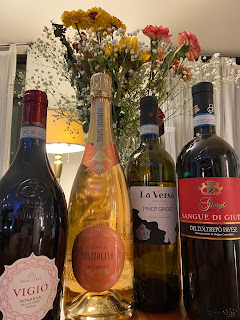
One of the more noteworthy wines from Oltrepò Pavese is Bonarda, which is a blend of Croatina (from 85% - 100%) as well as Barbera, Ughetta/Vespolina, and Uva Rara.  Bonarda is often made in the sparkling style here – similar to the frizzante Guttornios in Emilia-Romagna.  I sampled the Bonarda from Calatroni Vini, which is bottled with the label Mon Carul. The name of the wine is Viggio. A light, friendly, sparkling red with lively red fruit flavors, this would work well with pizza and casual snacks with friends.

One noteworthy fact is that this is the only part of Italy that makes classic method sparkling wine, i.e. with second fermentation happening in the bottle, from Pinot Nero grapes. The rosĂ© version is called CruasĂ©. The sample I tried from Mazzolino made a sophisticated impression, with persistent bubbles, a dried strawberry nose and palate with some baking spice on the finish – delicious with hors d’oeuvres and cheeses before Thanksgiving dinner.

Sangue di Giuda is a sweet wine blend of Barbera, Croatina, Uva Rara, Ughetta, and Pinot Nero. This wine is only found in this region. It has a lightly carbonated texture and a medium level sweetness – the alcohol is only 6%. Perfect for lightly sweet cakes or cookies, such as the Offelle di Parona of Lombardy. Susannah told us that, traditionally, every family would make this at home and offer it to guests.

Among the samples I tried was the La Versa Pinot Grigio 2019. La Versa was founded in 1905, and the winery joined a larger cooperative in 2020. The Pinot Grigio I sampled had a fresh nose of lime and was crisp on the palate with a zesty citrus profile, as well as minerality and good body.

Having only sampled a few of this small wine region’s varied bottles, I was left yearning to taste more of these interesting and delicious wines. I recommend putting Oltrepò Pavese on your list of new wine regions to explore.